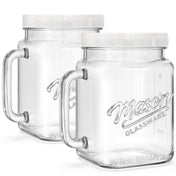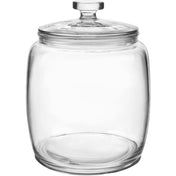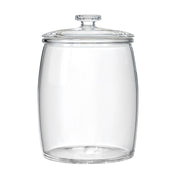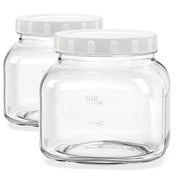

When you buy ingredients in bulk, bake from scratch, make pickles, or ferment your own food, you probably spend a lot of time thinking about what goes into your food.
But there is another question worth asking:
What is your food stored in?
A storage container is more than something that sits on a pantry shelf. When food stays inside for days, weeks, or even months, the materials that come into contact with it matter. This becomes even more important when you're storing acidic foods, fermented foods, or homemade ingredients.
So what should you actually look for in a food storage jar?
Why Glass Is a Popular Choice for Long-Term Food Storage
Many people are gradually replacing plastic storage containers with glass, especially for ingredients they keep for a long time.
Glass is non-porous, easy to clean, and doesn't tend to hold onto odors or stains. That's especially useful when you're storing strong-smelling foods such as coffee beans, fermented foods, pickles, or spices.
For people who buy flour, rice, grains, sugar, or other pantry staples in bulk, glass can also make the pantry feel more organized. Instead of leaving ingredients in large bags or mismatched plastic containers, you can see exactly what you have at a glance.
And there's another benefit: a clear glass jar doesn't necessarily need to be hidden away. A well-organized pantry can become part of the kitchen's decor rather than something you want to keep behind a cabinet door.
What About Acidic Foods and Metal Lids?
This is something many people don't think about until they start making their own food.
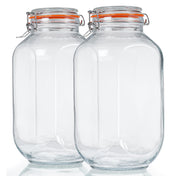
Pickles, fermented vegetables, kimchi, and other acidic foods may be stored in containers with metal components. The important question isn't simply whether a jar contains metal. It's which material actually comes into contact with your food.
A silicone inner plug or liner can create a barrier between the food and the metal lid. It's a small design detail, but it can be reassuring when you're storing homemade or acidic foods.
The same principle applies when you're choosing a container for long-term food contact: don't just look at the jar itself. Look at the entire lid and sealing system.
Food Safety Is Part of the Design
When you make and store your own food, you naturally care about what comes into contact with it. That's why we pay close attention to the materials and components used in our jars, especially for foods that may be acidic or stored for longer periods.
We've heard from customers who care deeply about this, with some even choosing to purchase their own testing kits for added reassurance. We believe that kind of attention is worth respecting.
That's also why our product information and included instructions cover important material and usage considerations, so you can feel more confident when using the jar for everyday food storage.
For us, food storage isn't just about keeping ingredients organized. It's about creating a container you can feel good about using every day.
Airtight Storage Helps Protect the Food You've Worked Hard to Make
Food-safe materials are only part of the equation. Your container also needs to protect what's inside.
A good seal can help keep air and moisture out, which matters when you're storing flour, sugar, grains, rice, pasta, coffee beans, or protein powder. Proper storage can also help reduce exposure to pantry pests and preserve freshness.
This becomes especially useful when you buy in bulk. Buying a large bag of flour saves money, but only if you have a practical way to store it afterward.
In that sense, a good storage jar becomes part of your food-preparation routine:
Buy in bulk → make from scratch → store properly → enjoy it longer.
Why a Wide Mouth Matters
A wide-mouth jar might sound like a small convenience, but you'll notice it every time you use it.
It's easier to:
-
Pour in flour, grains, or other dry ingredients
-
Reach in with a measuring cup
-
Scoop protein powder or pet food
-
Stir sourdough starter
-
Fill the jar without making a mess
-
Clean the inside thoroughly
A storage container shouldn't just be good at sitting on a shelf. It should be easy to work with.
When One Gallon Is the Right Size
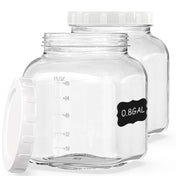
A one-gallon jar is useful when a standard container simply isn't big enough.
It's large enough for bulk ingredients such as flour, sugar, cereal, wheat berries, rice, and pasta. But its size also makes it practical for larger kitchen projects.
Think sourdough starter, kombucha, pickles, kimchi, mead, fermented vegetables, iced tea, or sun tea.
For people who make food in batches, one gallon can be a particularly useful middle ground: large enough for a meaningful batch, but still manageable enough to move around the kitchen.
A six-gallon container may hold more, but that doesn't necessarily make it easier to use.
A Large Glass Jar Needs Good Handling, Too
Once a one-gallon glass jar is full, it can become surprisingly heavy. That's where details such as a sturdy handle and a silicone base become more than decorative features.
A comfortable handle makes it easier to lift, carry, or pour a full jar. A silicone base can help keep it from sliding around while protecting the countertop and giving you a little more confidence when working with heavy glass.
Even the shape of the jar can matter. Square sides can help save shelf space, make the jar easier to grip, and prevent it from rolling away while you're cleaning or filling it.
These are small details, but they're the kinds of details you appreciate every time you use the jar.
Your Pantry Isn't the Only Place for It
A large, wide-mouth glass jar can quickly become useful beyond traditional food storage.
Depending on your household, it might hold:
-
Homemade bath salts
-
Laundry detergent
-
Craft supplies
-
Pet food
-
Flower arrangements
-
Seasonal decorations
-
Camping drinks or iced tea
That's one reason a one-gallon jar can be such a practical addition to a home: the same container can serve completely different purposes throughout the year.
What to Look for in a Food Storage Jar
Before buying one, consider the bigger picture:
What materials touch your food?
Is the seal actually airtight?
Can you easily fill, scoop, and clean it?
Is the size appropriate for your ingredients or batch projects?
Can you safely move it when it's full?
Does the base keep it stable?
Does the manufacturer provide clear information about materials and testing?
These questions are more useful than simply asking whether a jar "looks nice."
Because when you put time and care into the food you make, the storage container shouldn't be an afterthought.
Store What You Make With the Same Care You Put Into Making It
You choose your ingredients carefully. You bake from scratch. You preserve food, experiment with fermentation, buy in bulk, and build a pantry that works for your household.
Your storage deserves the same thought.
A good food storage jar should help you feel confident about what's touching your food, protect your ingredients from air and moisture, and make everyday kitchen tasks easier.
Taking care of your food doesn't stop when the cooking is done.
For more tips, recipes, and creative ideas on using your Syntic glass jar, visit the Syntic Blog—where timeless design meets everyday functionality, making storage and serving a delight. ✨